How solar water heating works
The controller monitors how much electricity the house is currently generating and consuming. As soon as a surplus arises, it feeds it into the boiler's heating element in small increments, so nothing is sent to the grid until the water is heated. Only then does any remaining surplus go to the battery or the grid. In the evening you no longer top up from the grid; the water has been heated by the sun.
Control is typically part of a hybrid inverter or a separate surplus regulator. It works with a standard electric boiler; no special storage tank is required.
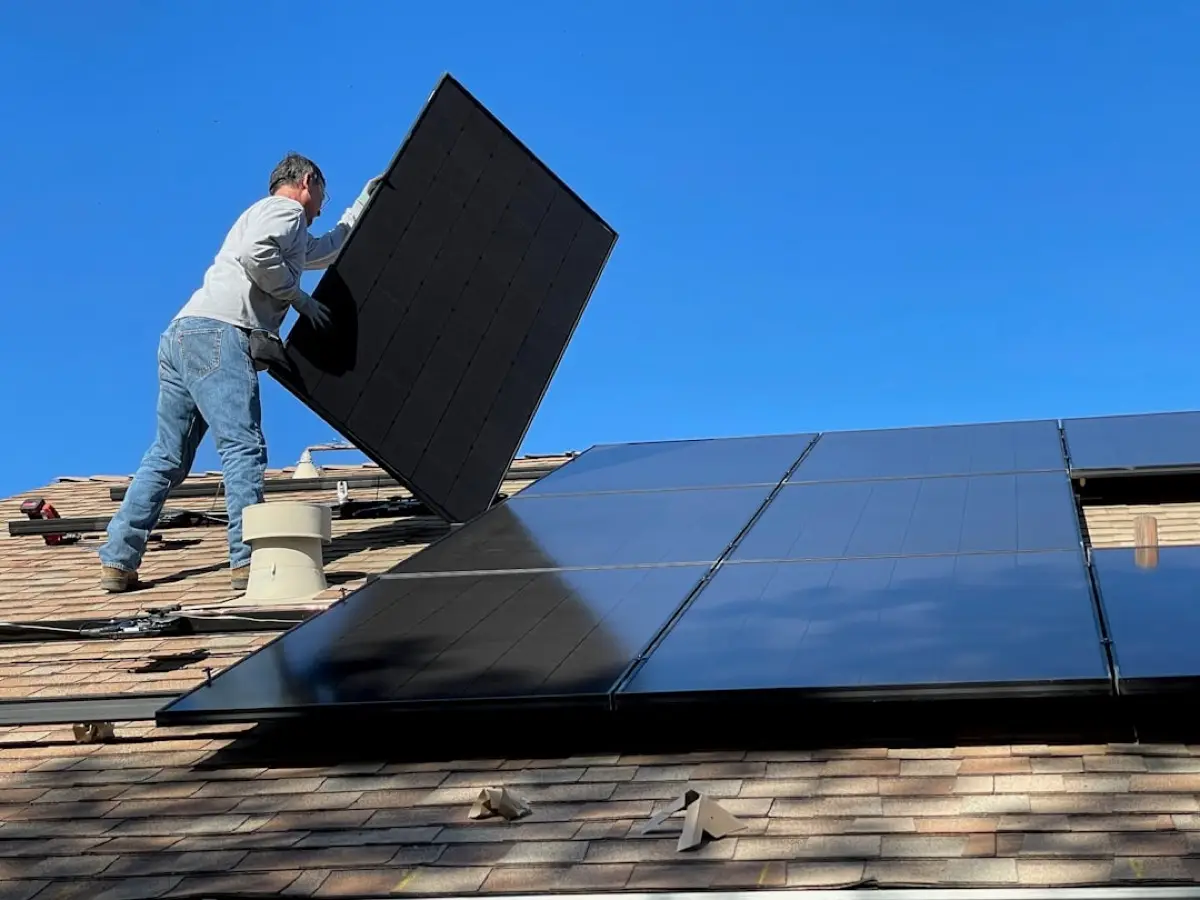
Photovoltaics or solar collectors
- Solar thermal collectors They heat a liquid that transfers the heat to a storage tank. Higher efficiency per area, but requires piping, a pump, an expansion vessel, fluid replacement, and carries a risk of overheating in summer.
- Photovoltaic heating Only a cable runs from the roof. When hot water is available, the surplus powers the fridge, washing machine, battery or heat pump. One roof, one technology, one inspection.
- Collectors make sense today mainly where they are already installed or for large hot water demands. For a detached house, we usually recommend photovoltaics with controlled heating.
Tank capacity
The larger the boiler, the more midday energy you can store. For a household of four, 200 to 300 litres; for higher hot water consumption, more. If you have a heat pump with its own storage tank, we direct surplus management to it. We will assess the condition and age of your existing boiler during the inspection.
NZÚ Light 2026: Direct subsidy for low-income households supports solar PV combined with water heating; the requirement is a storage tank of at least 200 litres and a plant output from 3 kWp. Who is eligible
Frequently Asked Questions about water heating
Is photovoltaic water heating better than solar collectors?
Thermal collectors have higher efficiency per square metre but require piping, a pump, antifreeze fluid and maintenance. Photovoltaic heating needs only cables from the panels, and any surplus can be directed to the house or battery instead of the boiler. For new builds and renovations, photovoltaics with controlled heating are now usually the preferred choice.
Is photovoltaics for water heating only, without grid connection, sufficient?
There are small off-grid panel setups connected directly to the boiler's heating element. They work, but they only heat water when it is sunny and do nothing else. If you are already going on the roof, it usually makes sense to install a grid-connected plant that heats water first from surplus energy and uses the rest elsewhere.
What size hot water cylinder for solar PV?
The larger the storage tank, the more midday surplus you can store. For a household of four, 200 to 300 litres is recommended. In NZÚ Light, a minimum storage tank of 200 litres is a condition for support.