Types of photovoltaic panels we install
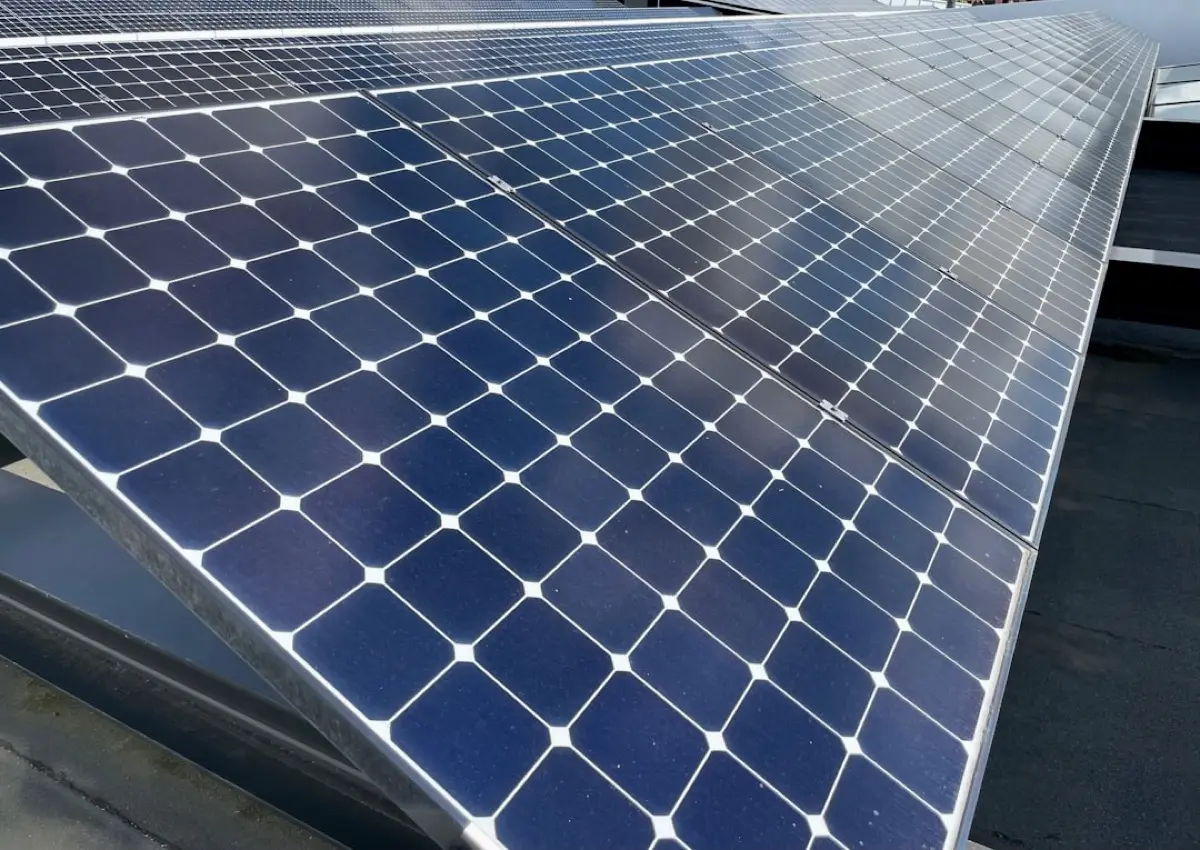
- Monocrystalline Type N panels (TOPCon)Today's standard, high efficiency, good output even in diffuse light and at higher temperatures. The choice for most roofs.
- All-black panels. Same technology with black frame and film; on dark roofing they are almost indistinguishable. Slightly lower output due to higher temperature, but aesthetically the cleanest option.
- Bifacial panels. They also utilise light reflected from light-coloured surfaces. They are suitable for flat roofs and canopies, but not for tiled roofs.
- Panels with performance optimisersfor roofs with partial shading or multiple orientations, where one shaded panel would reduce the output of the entire string.
How we anchor the panels
Tiled and concrete roofing: Stainless steel hooks under tiles fixed to rafters, aluminium profiles, without compromising the waterproofing layer. Sheet metal and standing seam roofing: clamps on the flange or sealing screws for trapezoidal sheets. Flat roof: structures with a tilt of 10 to 15 degrees, ballasted or anchored depending on the roof composition, structural assessment for larger arrays. Eternit and asbestos roofing: We will recommend replacing the roofing before installation. Panels on facades, pergolas or carports are handled individually.
How many panels a house needs
Not as much as fits on the roof, but as much as matches consumption and battery capacity. An oversized plant without using surpluses pays back more slowly than a correctly designed smaller one. The number of panels is derived from the annual bill, daily consumption patterns, and plans for an air-to-air heat pump or electric vehicle. How we design a photovoltaic power plant for a house
What we always specify for panels in our offer: manufacturer and model, peak power output, efficiency, performance and product warranty in years, temperature coefficient, and how the panels are distributed into strings on the inverter. Without these details, offers cannot be compared.
Maintenance and lifespan
Panels do not require regular maintenance; rain washes them clean. Inspection after the first year of operation, visual inspection of the structure and tightening of connections after a few years. Snow slides off tilted panels by itself; we do not recommend removing it manually. In case of production drop compared to monitoring, service will be dispatched.
Frequently asked questions about panels
What is the difference between a solar panel and a photovoltaic panel?
In everyday speech the terms are often confused. A photovoltaic panel generates electricity. A solar thermal collector heats water directly using sunlight and does not produce electricity. We install photovoltaic panels; we handle water heating from them electrically via a boiler, which is nowadays simpler and cheaper than separate collectors.
How many panels will fit on the roof?
A standard panel covers approximately 1.7 to 2 m² and has an output of around 430 to 500 Wp. The southern half of a detached house roof typically accommodates 10 to 20 panels, equating to 4 to 10 kWp. The actual number depends on the roof shape, windows, chimneys, edge setbacks and shading.
How long do photovoltaic panels last and how do they degrade?
Manufacturers typically guarantee that after 25 to 30 years the panel will retain approximately 85 to 90 % of its original output. The annual degradation is below one percent. The mechanical warranty on the product itself is usually shorter than the performance warranty, so we highlight both in our quotation.